
Browsing News Entries
SIGNIS World Congress 2026: The importance of media for evangelization
Posted on 08/4/2026 08:49 AM ()
The challenges of contemporary media, the ethical use of digital technologies and artificial intelligence is the theme guiding the SIGNIS congress that brought together communication experts and media outlets from around the world.
Archives: Vatican scholar unearthed a Jesuit's role in informing the Holy See about Nazi crimes
Posted on 08/4/2026 08:30 AM (USCCB News Releases)
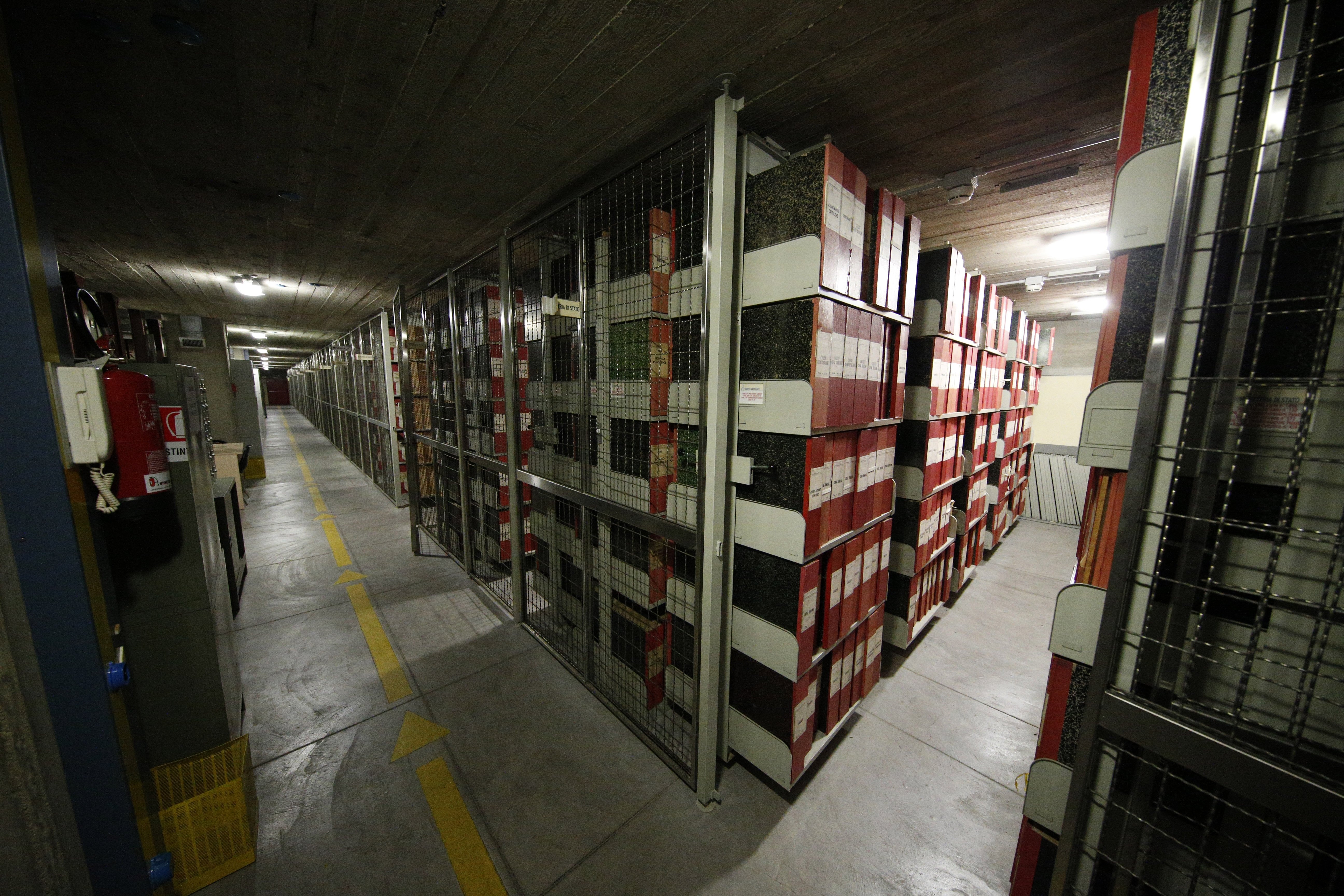
ROME (CNS) -- Back in 2023, a Vatican archivist discovered a letter to Pope Pius XII's personal secretary from a Jesuit priest in Germany, who was active in the resistance against the Nazis, reporting that thousands of Poles and Jews were being incinerated daily in a Polish concentration camp.
It was "a unique case" with "tremendous value," Giovanni Coco, the archivist, had told the Italian newspaper Corriere della Sera in an interview published Sept. 17, 2023.
The letter is important, Coco then said, because it not only details Nazi crimes at the Belzec extermination camp in 1942, but it refers to other reports and mentions Auschwitz, suggesting that the letter is probably part of much more correspondence between the two priests, said Massimo Franco, the journalist who interviewed the archivist in 2023.
"It makes it clear that in reality much more detailed reports about the extermination underway were getting to the Vatican," Franco said in an interview with Radio Radicale Sept. 17, 2023.
The other letters have not been found yet, "perhaps they were destroyed or lost," but nonetheless they would have described the Nazis' criminal acts against Catholic clergy, who were part of the resistance, and Jews, he said. The letter Coco discovered had been registered in the archive only in 2019 and was "a bit ruined," Franco added.
The letter is "also important because it makes it clear how much pressure the Nazis were putting on Pope Pius XII and, therefore, how terrorized the Catholic Church in Germany and Poland were that any kind of disclosure could in some way worsen Nazi retaliation against Catholics and Jews," Franco then said.
The letter, dated Dec. 14, 1942, was from German Jesuit Father Lothar König, based near Munich, who played an active role in organizing people and initiatives against Hitler's campaigns and in acquiring and sharing information about different camps, including Dachau.
His letter was to German Jesuit Father Robert Leiber, a key and trusted adviser of Pope Pius for decades, starting with the future pope's time as papal nuncio in Munich, then as Vatican secretary of state, and then as pope from 1939 to 1958.
Father König wrote that it seemed that about 6,000 people, especially Poles and Jews, were killed a day in the "blast furnace" at the Nazi concentration camp in Belzec, Poland. That extermination camp had started its operations in March 1942.
The letter also made reference to the camp at Auschwitz and an "indirect reference to Dachau," Franco said.
"These are some hints that make it clear the so-called 'Final Solution' had already not just begun in 1942, but in some way it is a clear reflection that it was getting (reported) to the Vatican and the pope himself," he said.
It is strongly believed the pope would have received the news in the letter, Franco said, especially since, just 10 days later, Pope Pius made a strongly worded appeal on Christmas Eve.
In that appeal, the pope denounced the fact that hundreds of thousands of people were being "marked down for death or gradual extinction,'' sometimes only by reason of their race; however, he did not explicitly mention the Nazis or Jews by name.
It is expected that further discoveries in the Vatican's archives on the pontificate of Pius XII will add to clarifying what the pope knew, what he did and why he did not publicly condemn the atrocities.
In 2022, another scholar offered evidence found in the Vatican archives that Pope Pius XII knew early on about the Holocaust and used that knowledge to warn the Allies and to save thousands of Jews.
The German historian Michael Feldkamp told Vatican News in 2022 that he found proof that the pope sent a message to U.S. President Franklin D. Roosevelt in March 1942 regarding "the systematic extermination of European Jews" and "warned him that something was happening in Europe in the war zones."
However, Feldkamp said, "these messages were not considered credible by the Americans." Nonetheless, "it is interesting, however, that the president of the United States or his associates in the State Department repeatedly contacted Pius XII for information on individual cases."
"Today we know … that Pius XII was confronted with the persecution of the Jews almost on a daily basis. He had been presented with all the reports and had created his own office within the Second Section of the Secretariat of State, where the staff had to deal exclusively with such matters," he said.
"During World War II, these leaders were in very close contact with Pius XII, reporting to him daily on persecution and mass deportations, as well as on the individual fates of the people who came to them," he said.
"The exciting thing now is that we can estimate that Pius XII personally saved about 15,000 Jews through his own personal efforts: opening monasteries, raising cloisters so that people could be hidden there, and so on. All of this is a huge sensation! The archival findings I have found now in the Vatican show me how accurately Pacelli was informed," the archivist told Vatican News.
A version of this story by Carol Glatz was originally published in 2023.
Christian–Confucian dialogue: Working together to build a more harmonious world
Posted on 08/4/2026 08:21 AM ()
At Sogang University in Seoul, South Korea, Cardinal George Jacob Koovakad, Prefect of the Dicastery for Interreligious Dialogue, opens the first formal dialogue between the Christian and Confucian traditions.
St. John Vianney: Saint of the Day for Tuesday, August 04, 2026
Posted on 08/4/2026 06:00 AM (Catholic Online > Saint of the Day)
Two relics from Saint Peter's Basilica arrive in East Flores, Indonesia
Posted on 08/4/2026 05:48 AM ()
Father Markus Solo Kewuto brings two relics from St Peter’s Basilica to Lewouran, Indonesia, in the hope of making it a centre of prayer and pilgrimage.
Pope: Digital communication must serve truth and human dignity
Posted on 08/4/2026 05:03 AM ()
Pope Leo XIV urges Catholic communicators gathered at the SIGNIS World Conference in Kigali to promote digital communication rooted in truth, human dignity, peace and care for creation.
Church in Morocco assists migrants returning from Ceuta
Posted on 08/4/2026 04:52 AM ()
The situation in the Spanish enclave appears to have largely returned to normal following the arrival of around 60,000 migrants from Morocco. Many families are still without news of their loved ones and fear they may have died during the crossing. On the Moroccan side of the border, Archbishop Emilio Rocha Grande of Tangier explains how the Church has organized to help them .
Organizers unveil hymn for Seoul WYD
Posted on 08/3/2026 09:10 AM ()
With just one year to go before 2027 World Youth Day in Seoul, its official theme song is announced: Confidite, Ego Vici Mundum, or “Take courage! I have overcome the world”.
Bishop Zaidan Calls for Prayer and Expresses Hope for Success of Peace Agreement in Gaza
Posted on 08/3/2026 08:30 AM (USCCB News Releases)
WASHINGTON - “I call for intense prayers for the success of these negotiations,” said Bishop A. Elias Zaidan, chairman of the U.S. Conference of Catholic Bishops’ Committee on International Justice and Peace, on the news of an agreement between the U.S.-led Gaza Board of Peace and Hamas.
Bishop Zaidan’s statement follows:
“I am heartened by news of an agreement which aims at the disarmament of Hamas and Israel’s military withdrawal from the Strip, and I call for intense prayers for the success of these negotiations. This agreement’s successful implementation, as its principles statement says, has the potential of finally providing the Palestinian people with a ‘credible political path that achieves self-determination and Statehood.’ This would be a major milestone.
“As I previously articulated, as ‘people of faith who deeply care for all our brothers and sisters who live in the land of Christ’s life, death, and glorious resurrection, we cannot lose this opportunity for peace.’ To further strengthen this advance, I call on the United States, Israel, and the international community to facilitate greater amounts of humanitarian and development assistance to the Strip. This should include restoring educational opportunities for children and youths, jobs, and clean water. Alleviating the suffering of the Gazan people is not only a vital moral imperative but is also necessary for the consolidation of peace in the Holy Land and the entire region.
“Conscious of the extreme challenges inherent in this ongoing peace process, let us entrust the hearts and minds of the negotiators to the maternal care of Our Lady of Wisdom, that she may illumine and enliven their efforts to finally achieve peace in those sacred lands.”
###
A century of Trinitarian mission in Madagascar full of hope, freedom and mercy
Posted on 08/3/2026 06:12 AM ()
The Order of the Most Holy Trinity and of the Captives mark a century of missionary presence in Madagascar, it gives thanks for generations of missionaries whose service has strengthened the local Church, fostered vocations, and carried the Gospel to the country’s most remote communities. The centenary also renews the order’s commitment to bring hope and redemption to the new frontiers of today's world.